1

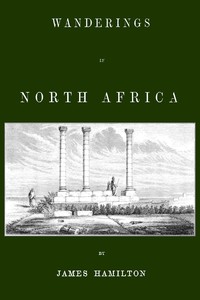
Wanderings in North Africa — Story, Setting & Ideas
(0 User reviews)
884
Project Gutenberg
2023
Not confirmed
Libyan Desert -- Description and travel; Cyrenaica (Libya) -- Description and travel
Readers of public-domain and historical texts
Project Gutenberg digital edition
en
Edition facts
Words
83,004
Reading time
361 min
Text sections
8
This digital edition of Wanderings in North Africa — Story, Setting & Ideas is described by source-level measurements including 83,004 words, 6 hr 1 min estimated reading time, and 8 detected text sections.
The text analysis averages about 30.6 words per sentence, while the detected sections provide another way to judge how the source is divided.
Project Gutenberg metadata also associates the work with “Libyan Desert -- Description and travel,” connecting these edition facts with the source record’s subject description.
Source:
Project Gutenberg record #70927
James Hamilton's 1856 travelogue exposes Ottoman corruption in Cyrenaica through sharp observations of official peculation, Arab customs, and the ruins of Cyrene, blending archaeological curiosity with a cynical view of colonial governance.
Editorial Edition Score
4.8/5
★★★★★
★★★★★
Calculated from edition completeness, EPUB availability, text structure and catalogue metadata. Not a user rating.
How this score is calculated
- Description quality20 pts
- Title & short description10 pts
- Source metadata20 pts
- Text length15 pts
- Chapters / structure15 pts
- EPUB file integrity20 pts
Total of 100 points, scaled to a 2.5-5.0 range. Editions with an empty description or a missing EPUB file are not scored.
Edition quality
Public-domain source text
Read the source text
The source text is kept in the dedicated reader, separate from this catalogue record and its commentary.
James Hamilton's Wanderings in North Africa (1856) opens with a notice that the author was absent in the East while the book went to press, a detail that frames the work as a record of immediate experience rather than a polished retrospective. The narrative moves from Malta to Benghazi and into the Libyan interior, but Hamilton's attention quickly fixes on the machinery of Turkish rule. He describes a system where officials 'eat'—his recurring metaphor for bribery and embezzlement—at every level, from the pacha down to the customs director. The excerpts show a traveler less interested in picturesque description than in documenting how power actually operates: the Bey who suppresses two hundred houses from the official count, the governor who returns a gift of grapes for form's sake while extorting grain. This is a book of political anatomy disguised as a journey.
The Metaphor of Eating
Hamilton repeatedly uses the verb 'eat' to describe official corruption, a choice that gives the text a sardonic consistency. An Arab tells him, 'The Pacha eats, the Bey eats, and the Gumruckdjy eats,' each buying silence with a share of his peculations. The metaphor extends to the director of customs who consigns 'about three-fourths of their produce to the treasury'—the rest presumably consumed. Hamilton notes that a Turk 'will never learn not to eat when he can,' adding in Italian magnare to underscore the appetite as a cultural trait. This verbal pattern turns administrative theft into a bodily function, making the system seem both organic and insatiable. The reader watches Hamilton trace the same figure through multiple episodes: the pacha's sons who monopolize trade, the tithe that becomes half the harvest, the witnesses reduced to silence. Each instance reinforces the idea that corruption is not an exception but the normal metabolism of governance.
Ruins as Evidence
Hamilton's archaeological interests surface in chapters on Cyrene, Apollonia, and the rock tombs, but the excerpts give only glimpses of these passages. The table of contents lists 'General View of Rock Tombs in the Necropolis of Cyrene' and chapters on 'Violation of the Tombs' and 'Allegorical Figures,' suggesting that ruins serve as more than scenery. In the available text, however, the physical remains of antiquity are overshadowed by the ruins of contemporary administration. The contrast is telling: while Hamilton can describe the 'splendid tomb' or 'lively vale' of Cyrene, his most detailed evidence comes from the living system of extortion. The grain extorted from cultivators is stored in magazines that 'every Frank in the place knew' existed, yet the official books are 'in good order.' The ruins of Greek and Roman cities become a backdrop against which the decay of Ottoman rule is measured—not as a fall from classical glory, but as a parallel structure of extraction and decay.
The Consul's Predicament
A recurring figure in the excerpts is the European consul, caught between his duty to report abuses and the impossibility of proving them. Hamilton recounts how the French consular agent, after gathering evidence of the pacha's son's grain theft, is forced to apologize when witnesses recant under threat. The Bey who judges the case is himself 'the chief delinquent.' The consul knows the truth; the ships load the corn openly. This episode crystallizes Hamilton's view of colonial power: the European presence is not a corrective but a frustrated witness. The consul's powerlessness mirrors the traveler's own position—able to observe, record, and condemn, but unable to intervene. Hamilton's tone here is less indignant than clinical, as if he is cataloging a natural phenomenon. The passage on 'What a Consul should be' (Chapter XII) likely expands this theme, but even in isolation, the dynamic is clear: the system absorbs outside scrutiny by making it complicit in its own silence.
Readers approaching Wanderings in North Africa should expect a travel narrative that spends as much time on tax collection as on topography. Hamilton's eye for detail serves a forensic purpose: he notes the exact number of houses, the precise percentage of grain diverted, the specific sums of bribes. The book rewards those who read for argument as much as for atmosphere. Pay attention to the recurring metaphors—eating, masks, ostrich-like digestion—that bind discrete observations into a coherent critique. The ruins of Cyrene may be the nominal destination, but the real subject is the living architecture of power.
Reading about Hamilton’s weary cynicism among Cyrene’s ruins, I remembered standing in a crowded hall, a stranger among celebrants, watching history arrive like a tide. Another journal—the visit of Lafayette to America—stirred that same ache, the sense of witnessing something grand and already fading. Lafayette in America in 1824 and 1825, Vol. 2 (of 2) Or, Journal of a Voyage to the United States — Reading Companion held that quiet, double-edged wonder, too.
There are no reviews for this eBook.
There are no comments for this eBook.
Reader reflection
How did this book work for you?
Your answers remain private and are stored only in this browser.
Your progress
0
/
10
2
Was reading this book enjoyable?
3
Would you recommend this book to another reader?
4
How easy was the book to follow?
5
How clear did the writing feel?
6
Could you apply anything you learned?
7
How distinctive were its ideas or approach?
8
Would a second reading be valuable?
9
In one sentence, what did you learn?
10