1

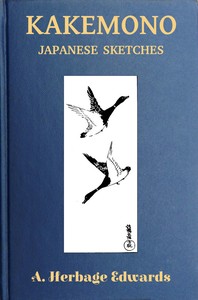
Kakemono — Text and Context
(0 User reviews)
587
Project Gutenberg
2025
Not confirmed
Japan -- Description and travel; Japan -- Social life and customs
Readers of public-domain and historical texts
Project Gutenberg digital edition
en
Edition facts
Words
81,365
Reading time
354 min
Text sections
60
Kakemono — Text and Context can be approached with a clearer sense of reading commitment from its source measurements: 81,365 words, 5 hr 54 min estimated reading time, and 60 detected text sections.
The text analysis averages about 22.7 words per sentence, while the detected sections provide another way to judge how the source is divided.
Project Gutenberg metadata also associates the work with “Japan -- Description and travel,” connecting these edition facts with the source record’s subject description.
Source:
Project Gutenberg record #76241
A 1906 collection of sketches on Japanese faith, art, and daily life, emphasizing symbolic interpretation in Buddhism, flower arrangement, and design. The author uses precise observation of temples, landscapes, and customs to explore how Japanese culture embeds ethical meaning in visual and ritual forms.
Editorial Edition Score
4.9/5
★★★★★
★★★★★
Calculated from edition completeness, EPUB availability, text structure and catalogue metadata. Not a user rating.
How this score is calculated
- Description quality20 pts
- Title & short description10 pts
- Source metadata20 pts
- Text length15 pts
- Chapters / structure15 pts
- EPUB file integrity20 pts
Total of 100 points, scaled to a 2.5-5.0 range. Editions with an empty description or a missing EPUB file are not scored.
Edition quality
Public-domain source text
Read the source text
The source text is kept in the dedicated reader, separate from this catalogue record and its commentary.
Edwards opens not with a travel itinerary but with a sustained meditation on the Great Buddha at Kamakura, where the statue's 'heavy-lidded eyes' and 'slow smile' become a recurring motif for the inscrutability of Buddhist teaching. The prose shifts between precise physical description—'a line of dark bronze against the blue sky'—and philosophical questioning, a pattern that recurs throughout the sketches. The author's voice is that of an attentive outsider who resists easy conclusions, letting the details of cherry blossoms, running water, and bronze surfaces carry the weight of inquiry.
Symbolic Density in Design
Edwards argues that Japanese art functions as 'moral shorthand,' where every motif carries layered meaning. The description of a candlestick—a stork standing on a tortoise holding a convolvulus—is unpacked as a visual philosophy: the stork represents Life, the tortoise Eternity, and the morning glory Mortality. This reading is not presented as esoteric but as a typical example of how 'no design is ever unmeaning, haphazard.' The author contrasts this with Western art, which Edwards claims often lacks such intentional symbolism. The analysis extends to flower arrangement, where each stem corresponds to a tenet of Chinese philosophy, and lessons conclude with ethical discussion. Edwards suggests that this symbolic density allows Japanese art to express 'complex and subtle emotions' through suggestion rather than direct portrayal, likening it to music's evocative power.
The Observer's Position
Throughout the sketches, Edwards positions herself as a deliberate observer, often lingering in a single spot to absorb atmosphere. In 'The Moat,' she stands on a bridge, noting the 'dark, still waters' and the contrast between a summer-like sky and the cold northern wind. The scene is rendered with sensory precision—the warmth of sunlight, the lift of a cloak—but the author refrains from imposing narrative or emotion. This restraint is consistent: Edwards records what is visible and audible, letting the environment speak. The effect is a travelogue that prioritizes attention over anecdote, inviting readers to see Japan through a lens of patient scrutiny rather than exoticism.
Faith as Encountered, Not Explained
Edwards approaches religious sites as a visitor who records physical details and local stories without claiming insider knowledge. The chapter on Dai Butsu dwells on the statue's 'immutable' stillness and the 'mystery' that 'draws one nearer,' but the author does not resolve the Buddha's secret. Similarly, the legend of the Noseless Jizō is recounted without editorializing. The sketches of Shiba's temples and the shrine of Inari focus on architecture, ritual objects, and the interplay of light and shadow. Edwards's method is to present what she sees and hears—the sound of running water as 'a liquid prayer,' the 'dark bronze' against blue sky—and to let the reader infer the spiritual dimension. This approach respects the foreignness of the subject while making it accessible through concrete observation.
Rain, Light, and the Texture of Place
The section 'Scenes in Rain and Sunshine' demonstrates Edwards's skill at capturing transient effects. In 'Rain,' she describes how wet leaves and canals transform under gray skies, while 'The Black Canal' evokes a specific mood through color and reflection. The author's diction is precise: 'blushing snowflakes' for cherry petals, 'liquid prayer' for water. These sketches are brief, often under a page, and function like verbal photographs—fixed moments that accumulate into a textured portrait of Japan. Edwards does not generalize about Japanese character or culture from these scenes; instead, she lets the details of weather, light, and season stand as their own evidence. The result is a collection that values the particular over the typical.
Readers approaching Kakemono should expect a series of discrete impressions rather than a continuous narrative. Edwards's strength lies in her willingness to pause and describe, and the book rewards those who read slowly, attending to the symbolic weight she assigns to everyday objects. The glossary of Japanese terms at the end is a useful reference, but the sketches themselves are best encountered as meditations—each a single, carefully framed observation that invites reflection rather than conclusion.
Reading Kakemono, I keep pausing over how much weight a single branch or stone can carry. There’s a quiet patience in its noticing, the way a temple gate knows its own shadow. When I later picked up From Berlin to Bagdad and Babylon — Inside the Classic, the same unhurried attention returned—not to flowers, but to ruined walls and riverbanks, each holding their stories just as gently. Strange, how two different lands can teach the same kind of listening.
There are no reviews for this eBook.
There are no comments for this eBook.
Reader reflection
How will you remember this book?
Save your reaction, strongest insight, and memorable passage.
Your progress
0
/
10
2
Was reading this book enjoyable?
3
Is this a title you would suggest to others?
4
How much effort did this book require?
5
Is this a title worth rereading?
6
What did you appreciate most?
7
Did it raise ideas you would like to talk about?
8
What was its emotional impact?
9
What did this book teach you most?
10