1

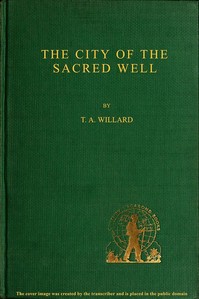
The City of the Sacred Well — Background and Themes
(0 User reviews)
1376
Project Gutenberg
2020
Not confirmed
Yucatán (Mexico : State) -- Description and travel; Mayas; Thompson, Edward Herbert, 1860-1935; Chichén Itzá Site (Mexico)
Readers of public-domain and historical texts
Project Gutenberg digital edition
en
Edition facts
Words
88,021
Reading time
383 min
Text sections
23
The City of the Sacred Well — Background and Themes can be approached with a clearer sense of reading commitment from its source measurements: 88,021 words, 6 hr 23 min estimated reading time, and 23 detected text sections.
The text analysis averages about 24.8 words per sentence, while the detected sections provide another way to judge how the source is divided.
Project Gutenberg metadata also associates the work with “Yucatán (Mexico : State) -- Description and travel,” connecting these edition facts with the source record’s subject description.
Source:
Project Gutenberg record #62702
An account of Edward Herbert Thompson's excavations at Chichén Itzá, blending archaeological narrative with Maya legend, including the story of Ix-Lol-Nicte and the Sacred Well.
Editorial Edition Score
4.9/5
★★★★★
★★★★★
Calculated from edition completeness, EPUB availability, text structure and catalogue metadata. Not a user rating.
How this score is calculated
- Description quality20 pts
- Title & short description10 pts
- Source metadata20 pts
- Text length15 pts
- Chapters / structure15 pts
- EPUB file integrity20 pts
Total of 100 points, scaled to a 2.5-5.0 range. Editions with an empty description or a missing EPUB file are not scored.
Edition quality
Public-domain source text
Read the source text
The source text is kept in the dedicated reader, separate from this catalogue record and its commentary.
Willard frames Thompson's work through a dual lens: the archaeologist's systematic dredging of the Sacred Well and the Maya legend of Ix-Lol-Nicte, a princess thrown to the Rain God. The preface establishes Thompson as both a trained investigator and a romantic figure—"blue-eyed six-footer, this dreamer and adventurer"—whose lifelong quest began with Stephens's travelogues. The narrative shifts between firsthand accounts of excavations and retold myths, such as the annual sacrifice to Yum Chac. This tension between empirical discovery and indigenous storytelling shapes the book's structure, inviting readers to consider how material relics and oral tradition coexist.
The Archaeologist as Double Agent
Willard presents Thompson as a man serving two masters: the United States government and American archaeological institutions. Appointed consul to Yucatan as a youth, he remained for over twenty-five years, leading expeditions "under the auspices of American archæological institutions" while also working with "only his faithful native followers." This dual role—official diplomat and scientific explorer—allowed him access to sites otherwise closed to foreigners. The preface emphasizes his personal connection to the region: he is called "Don Eduardo" by locals, a mark of trust. Yet the narrative never fully resolves the tension between his institutional obligations and his individual passion, leaving the reader to weigh the costs of such a divided mission.
The Princess and the Well: Myth as Evidence
The legend of Ix-Lol-Nicte occupies a central place in the text, described in ornate prose: "the zac nicte tree burst into bloom for the first time" at her birth, and she grows up in a garden where "the little wild honey-bees... clung to her glossy tresses." This mythic interlude serves as more than color; it provides a cultural framework for the well's significance. Willard does not dismiss the story as mere superstition but treats it as a key to understanding why the Maya chose this site for ritual sacrifice. The princess's fate—"a last forward swing and the bride of Yum Chac hurtles far out over the well"—mirrors the archaeological finds Thompson later retrieves from the mud, linking narrative and artifact.
Voice and Authenticity in the Narrative
Willard writes in a hybrid voice: part travelogue, part scientific report, part folkloric retelling. He claims intimate knowledge of Thompson, stating "I know him better, perhaps, than does any other man," and positions himself as a necessary scribe. The prose shifts between detached observation and lyrical description, as when the princess's garden is filled with "wave upon wave of sweet perfume." This stylistic range raises questions about authenticity—whose story is being told? Willard filters Thompson's experiences through his own romantic sensibility, blending the archaeologist's data with his own embellishments. Readers should attend to these shifts in register, as they signal where the text moves from documentation to interpretation.
Willard's book resists easy categorization, oscillating between field report and legend. For readers interested in the history of archaeology, it offers a firsthand account of early twentieth-century methods and the personal drive behind them. Those drawn to Maya mythology will find the embedded narratives evocative, though filtered through a foreign lens. The value lies in observing how one man's obsession—Thompson's—is translated into a story that serves both science and romance.
There are days when reading about Thompson peering into that dark cenote feels less like history and more like standing at a familiar threshold. A certain nostalgia creeps in, the same quiet ache I get wandering through London in the Sixties (with a few digressions) — Themes and Context, where time itself seems to be leaning close, whispering that some places keep our old selves forever.
There are no reviews for this eBook.
There are no comments for this eBook.
Reader reflection
Record your reading impressions
A brief reflection can help important ideas stay with you longer.
Your progress
0
/
10
2
Did this book hold your interest?
3
How likely are you to recommend this book?
4
Did the language feel accessible?
5
Do you expect to return to this book?
6
How valuable was this book for your own interests?
7
How strongly did the book affect you emotionally?
8
Did any part of the book feel personally relevant?
9
In one sentence, what did you learn?
10