1

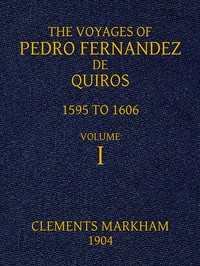
The Voyages of Pedro Fernandez de Quiros, 1595 to 1606. Volume 1 — Inside the Classic
(0 User reviews)
205
Project Gutenberg
2012
Not confirmed
Oceania -- Discovery and exploration; Mendaña de Neira, Alvaro de, 1542?-1595; Discoveries in geography -- Spanish; Early maps
Readers of public-domain and historical texts
Project Gutenberg digital edition
en
Edition facts
Words
127,432
Reading time
555 min
Text sections
18
The Voyages of Pedro Fernandez de Quiros, 1595 to 1606. Volume 1 — Inside the Classic can be approached with a clearer sense of reading commitment from its source measurements: 127,432 words, 9 hr 15 min estimated reading time, and 18 detected text sections.
The text analysis averages about 21.5 words per sentence, while the detected sections provide another way to judge how the source is divided.
Project Gutenberg metadata also associates the work with “Oceania -- Discovery and exploration,” connecting these edition facts with the source record’s subject description.
Source:
Project Gutenberg record #41200
This volume presents Pedro Fernandez de Quiros's first-person narratives of two Spanish expeditions in the Pacific (1595–1606), translated and edited by Sir Clements Markham for the Hakluyt Society. The excerpts reveal a pilot's detailed observations of navigation, indigenous encounters, and colonial logistics, alongside unexpected anecdotes such as an elephant's clever response to a soldier's trick.
Editorial Edition Score
4.8/5
★★★★★
★★★★★
Calculated from edition completeness, EPUB availability, text structure and catalogue metadata. Not a user rating.
How this score is calculated
- Description quality20 pts
- Title & short description10 pts
- Source metadata20 pts
- Text length15 pts
- Chapters / structure15 pts
- EPUB file integrity20 pts
Total of 100 points, scaled to a 2.5-5.0 range. Editions with an empty description or a missing EPUB file are not scored.
Edition quality
Public-domain source text
Read the source text
The source text is kept in the dedicated reader, separate from this catalogue record and its commentary.
The volume opens not with a grand proclamation but with a precise nautical record: “On Friday, the 9th of April, of the year 1595, the Commander-in-Chief, Alvaro de Mendaña, set sail with his fleet … from the port of the Callao of Lima.” The chief pilot, Pedro Fernandez de Quiros, immediately establishes his authority through course bearings, latitudes, and a list of four hundred persons aboard four vessels. Yet the narrative soon shifts from such technicalities to vivid, often unsettling encounters. When the fleet reaches an island named Magdalena, Quiros describes the natives as “white, and of very agreeable appearance, tall and strong,” but also notes that they came “swimming, and others on logs” — a detail that underscores the cultural gap between the Spanish observers and the islanders.
A Pilot’s Eye for Detail
Quiros writes as a practical navigator, but his observations extend beyond winds and currents. He records the appearance of the people he meets with a cataloger’s precision: “handsome teeth, eyes and mouth, hands and feet, and most beautiful flowing hair.” Such descriptions serve both as ethnographic notes and as implicit justifications for Spanish interest. Yet the excerpts also contain moments that resist easy categorization. In one remarkable passage, Quiros recounts an elephant that, after being tricked by a soldier, “took up a little earth in his trunk, and threw it in the face of the soldier who had deceived him.” The anecdote is presented as evidence of the animal’s understanding of language, but it also reveals the Spanish tendency to project human motives onto non-human actors. This blend of the practical and the anecdotal gives the narrative a texture that is neither purely scientific nor purely fantastical.
The Governess and the Logistics of Empire
Amid the accounts of landfalls and skirmishes, the excerpts include a surprising domestic interlude. After festivities, “our Governess married a young cavalier named Don Fernando de Castro, a cousin of the Governor Marinas.” The marriage is described in terms of property: the husband “took possession of the property of his wife as his own,” and this wealth allowed the ship to be “victualled and furnished with all that was necessary.” The passage highlights how colonial expeditions depended on personal alliances and the transfer of resources through marriage. Quiros presents this as a matter-of-fact arrangement, but it also illustrates the precariousness of the venture — a single wedding could determine whether a fleet could continue. The narrative then jumps to the hardships of the voyage to New Spain, ending with Quiros taking leave of the Governess and embarking for Peru. The personal and the logistical are intertwined throughout.
Editorial Framing and the Hakluyt Society
The volume is a product of the Hakluyt Society, a fact that shapes its presentation. Sir Clements Markham, the translator and editor, was a prominent geographer and president of the society. The title page lists a council of distinguished members, and the contents are organized into multiple narratives, including Quiros’s own account and later documents such as a letter from Luis Vaez de Torres. The editorial apparatus — footnotes, maps, and an introduction — signals that this is a scholarly edition intended for researchers. Yet the excerpts themselves are raw and unpolished, full of abrupt transitions and unexplained details. Readers should be aware that the text is a translation of early modern Spanish, filtered through Victorian editorial conventions. The volume does not provide a continuous story but rather a collection of documents that require careful reading to disentangle the voices of Quiros, his contemporaries, and his editor.
Readers approaching this volume should treat it as a primary source rather than a polished history. The narratives are fragmentary, and the editorial framework — including the Hakluyt Society’s conventions — shapes what is presented. Pay attention to what Quiros chooses to record and what he omits: the elephant anecdote, for instance, reveals as much about Spanish expectations as about the animal. Cross-referencing the different accounts in the volume may clarify events that Quiros himself leaves ambiguous. This is a work for those interested in the raw materials of exploration history, not for those seeking a seamless tale of discovery.
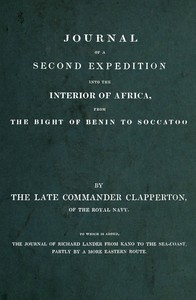
That rainy afternoon, I lingered over Quiros’s careful logs, his quiet wonder at unknown shores. His patient, unadorned record of strange lands stayed with me, leading me, almost by accident, to another voice from another century, equally absorbed in mapping the unfamiliar. The relentless heat of Benin replaced the Pacific spray. I found myself lost in his measured observations, a different ocean, same human curiosity. Journal of a second expedition into the interior of Africa, from the Bight of Benin to Soccatoo — A Closer Reading became my quiet companion for the rest of the storm.
There are no reviews for this eBook.
There are no comments for this eBook.
Reader reflection
What was your reading experience?
Capture what you thought, learned, and would like to remember.
Your progress
0
/
10
2
How much did you enjoy the reading experience?
3
How likely are you to recommend this book?
4
Did the language feel accessible?
5
Would this book work well in a reading group?
6
How distinctive were its ideas or approach?
7
Was the book moving at the right speed?
8
Do you expect to return to this book?
9
What did this book teach you most?
10