1

Young Americans Abroad Vacation in Europe: Travels in England, France, Holland, Belgium, Prussia and Switzerland — Context and Discussion
(0 User reviews)
1217
Project Gutenberg
2007
Not confirmed
Europe -- Description and travel
Readers of public-domain and historical texts
Project Gutenberg digital edition
en
Edition facts
Words
86,500
Reading time
377 min
Text sections
9
The catalog record for Young Americans Abroad Vacation in Europe: Travels in England, France, Holland, Belgium, Prussia and Switzerland — Context and Discussion provides practical reading context through 86,500 words, 6 hr 17 min estimated reading time, and 9 detected text sections.
The text analysis averages about 18.3 words per sentence, while the detected sections provide another way to judge how the source is divided.
Project Gutenberg metadata also associates the work with “Europe -- Description and travel,” connecting these edition facts with the source record’s subject description.
Source:
Project Gutenberg record #20625
This editorial note examines how the opening, middle, and later excerpts of J.O. Choules's 1852 travelogue guide a first reading, focusing on the framing device of a teacher-led tour, the blend of historical commentary and personal anecdote in Paris, and the shift toward practical travel advice.
Editorial Edition Score
4.8/5
★★★★★
★★★★★
Calculated from edition completeness, EPUB availability, text structure and catalogue metadata. Not a user rating.
How this score is calculated
- Description quality20 pts
- Title & short description10 pts
- Source metadata20 pts
- Text length15 pts
- Chapters / structure15 pts
- EPUB file integrity20 pts
Total of 100 points, scaled to a 2.5-5.0 range. Editions with an empty description or a missing EPUB file are not scored.
Edition quality
Public-domain source text
Read the source text
The source text is kept in the dedicated reader, separate from this catalogue record and its commentary.
The introduction frames the entire work as a collection of letters written by three American boys—aged twelve, fourteen, and sixteen—during a European tour with their instructor. The editor, J.O. Choules, explains that the letters were originally sent to a friend back home and are now published for a young audience. This epistolary structure immediately establishes a dual perspective: the reader observes Europe through the eyes of adolescent travelers while also receiving curated, didactic content. The preface explicitly states that no similar work was known to the authors, positioning the book as a novelty in 1852.
A Framed Narrative for Young Readers
The opening excerpt reveals a deliberate pedagogical design. The instructor prepares the boys with reading before departure, and each keeps a journal to aid correspondence. This framing suggests the letters are not spontaneous but shaped by prior study and reflection. The ages of the travelers—twelve, fourteen, and sixteen—are specified, likely to signal to contemporary readers that the content is appropriate for their own age group. The dedication to George Sumner, an American diplomat, adds a layer of political and cultural aspiration, linking the tour to ideals of freedom and gratitude.
Paris Through a Young American Lens
In the Paris letters, the narrator blends historical commentary with personal reactions. Descriptions of the Pont Neuf, the Bastille site, and the Colonne de Juillet are interwoven with references to recent events like the 1848 revolution and the death of the Archbishop of Paris. The tone is often evaluative: the Seine is dismissed as “not much of an affair,” while the column’s vibration in the breeze is noted with skepticism. The narrator also includes a humorous encounter with a fellow American tourist who asks if Galignani’s paper is “reliable,” injecting a moment of cultural self-awareness.
Geological Curiosities and Time Constraints
A later excerpt reveals the tension between the travelers’ limited schedule and the vastness of what they encounter. At a museum, the narrator regrets spending only three hours on exhibits that would require “years of diligent study” to fully understand. Specific details—such as amber containing “antediluvian insects”—show a fascination with natural history, but the writer acknowledges his own limitations. This self-awareness recurs throughout the excerpts, reminding the reader that the letters are impressions, not exhaustive accounts.
Practical Advice and the Pace of Travel
The later excerpts shift toward practical guidance for other young travelers. The narrator describes the difficulty of keeping up with a sightseeing program and sympathizes with a fellow tourist’s exhaustion. Comments on hotel breakfasts, daily papers, and packet days ground the narrative in the logistics of 1850s travel. These details serve as implicit advice: plan carefully, allow time for rest, and prioritize experiences. The letters thus function both as a record and as a informal handbook for readers contemplating their own journeys.
The Role of the Editor and the Epistolary Form
Choules’s editorial hand is visible in the selection and arrangement of letters. The introduction notes that the letters were written “at the advice of many friends,” suggesting a collaborative or curated process. The dedication and preface establish a clear audience: American youth. The epistolary format allows for varied tones—from earnest description to wry observation—while maintaining a consistent first-person perspective. Readers should note that the letters are addressed to a single friend, which creates an intimate, conversational tone even when discussing grand monuments.
Reading the excerpts in sequence reveals a work that balances instruction with entertainment. The letters are not merely descriptive; they model how a young American might engage with European history, art, and daily life. The editor’s framing encourages readers to view the tour as both educational and enjoyable. For a first reading, pay attention to the shifts in tone—from awe to humor to practical complaint—as they reflect the genuine experience of travel.
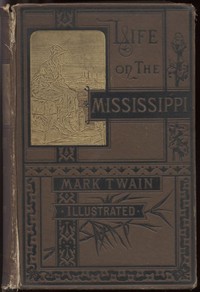
I remember sitting on a train through the Rhineland, guidebook open but unread, thinking how a place becomes real only when someone shares it aloud—like that teacher in Choules’s tour, his voice filling the carriage with history. It reminded me of a quiet passage in Life on the Mississippi, Part 5. — Story, Setting & Ideas, where the river itself seems to murmur its own old stories.
There are no reviews for this eBook.
There are no comments for this eBook.
Reader reflection
How will you remember this book?
Save your reaction, strongest insight, and memorable passage.
Your progress
0
/
10
2
What was your overall reaction to the book?
3
How likely are you to recommend this book?
4
What was the reading difficulty like?
5
How useful were the ideas in this book?
6
How understandable was the text?
7
What was the strongest part of the book?
8
Did any part of the book feel personally relevant?
9
What is the main idea you are taking away?
10