
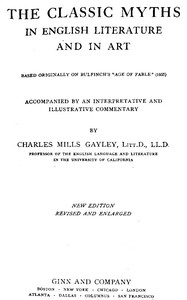
The Classic Myths in English Literature and in Art (2nd ed.) (1911) by Gayley et al.
Let's clear something up right away: this isn't a novel with a single plot. The Classic Myths is more like a master key. It unlocks the stories behind the stories we all know. The book is organized by mythology—Greek and Roman myths take center stage, but you also get tours through Norse legends and even a peek at Eastern traditions. For each major myth, like the saga of the Trojan War or the adventures of Odysseus, the authors give you a clear, straightforward version of the tale. But they don't stop there.
The Story
The real magic happens in the second half of each chapter. After telling you about Zeus, Apollo, or Thor, the book shows you where these figures pop up in the real world. It points you to the famous painting of Perseus saving Andromeda, the poem by Keats about a Grecian urn, or the sculpture in a museum you might have walked right past. It connects the ancient myth directly to a sonnet by Shakespeare, a play by Racine, or an epic by Milton. The 'story' here is the incredible, unbroken journey of these myths from campfires and clay tablets to the canvases, books, and buildings of the last few hundred years.
Why You Should Read It
I loved this book because it made me feel smart in the best way. It didn't just give me information; it gave me context. Before reading it, I enjoyed Renaissance art or Romantic poetry on a surface level. Now, I can recognize the symbolism. I see a painting of a woman with a mirror and think, 'Ah, that's the vanity of Narcissus.' I read a modern fantasy novel full of trickster gods and understand the ancient archetype the author is playing with. This book turns cultural literacy from a vague concept into a practical skill. It's endlessly rewarding to have those 'aha!' moments where a random reference finally clicks.
Final Verdict
This is the perfect book for curious minds who feel like they're missing the inside jokes of Western art and literature. It's for the reader who wants to appreciate Shakespeare more deeply, understand the names of planets and constellations, or simply get more out of a trip to an art museum. It's also a fantastic resource for writers and creators looking for timeless story patterns. Don't be intimidated by the 1911 publication date—the writing is clear and accessible. Think of it less as a textbook and more as your friendly, incredibly well-read guide to the stories that shape our world.
This book is widely considered to be in the public domain. Knowledge should be free and accessible.
William Davis
5 months agoI found the author's tone to be very professional yet accessible, the practical checklists included are a great touch for real-world use. Definitely a five-star contribution to the field.
Ashley Hernandez
2 years agoBefore I started my latest project, I read this and the wealth of information provided exceeds the average market standard. Truly a masterpiece of digital educational material.
Mary Anderson
8 months agoIt’s refreshing to see such a high standard of digital publishing.
William Jones
9 months agoThe clarity of the concluding remarks is very professional.



James Wilson
1 year agoThe balance between academic rigor and readability is perfect.