
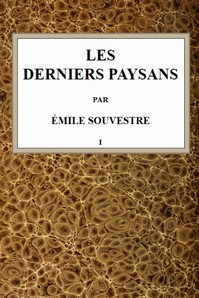
Les derniers paysans - Tome 1 by Émile Souvestre
Émile Souvestre’s Les derniers paysans isn’t a fast-paced adventure. Instead, it’s a slow, careful look at a world on the edge of vanishing. Published in the 1840s, it captures a moment in rural Brittany where centuries of tradition are meeting the cold, hard rules of a modernizing France.
The Story
The book follows a handful of families in a small village. The main thread involves Yvon, an aging farmer whose life has been defined by the communal lands everyone shares. New national laws are being enforced, demanding these common fields be divided up and privatized. For Yvon, this isn’t just a policy change—it’s an attack on the very heart of his community. We see how this pressure strains family bonds, pits neighbor against neighbor, and forces younger characters, like Yvon’s son, to choose between the old ways and a new, uncertain future. The drama unfolds in everyday moments: arguments over a boundary stone, the struggle to pay new taxes, the quiet grief of a forgotten festival.
Why You Should Read It
What got me was how alive Souvestre makes this village feel. These aren’t just symbols of a dying culture; they’re stubborn, proud, funny, and flawed people. You understand why Yvon clings to the past, and you also feel the restless energy of the younger generation. Souvestre doesn’t preach. He shows you both the beauty of a self-sufficient community and its harsh limitations. Reading it in the 21st century, the echoes are unmistakable. It’s about the cost of progress, the erosion of local culture, and the quiet resilience of people whose lives are reshaped by forces far beyond their control. It’s surprisingly moving.
Final Verdict
This is a book for patient readers who love character-driven stories and social history. If you enjoyed the grounded feel of George Eliot’s novels or the rural portraits in Thomas Hardy’s work, you’ll find a similar depth here. It’s perfect for anyone interested in French history, the human side of agricultural change, or simply a beautifully observed story about holding on and letting go. Just don’t expect a tidy ending—life, as Souvestre reminds us, is rarely that simple.
This content is free to share and distribute. Enjoy reading and sharing without restrictions.
Karen Harris
7 months agoHelped me clear up some confusion on the topic.
Elizabeth Johnson
9 months agoSurprisingly enough, the narrative structure is incredibly compelling. I couldn't put it down.
Donald Torres
4 months agoClear and concise.
Donna Wilson
6 months agoAfter hearing about this author multiple times, the atmosphere created is totally immersive. Don't hesitate to start reading.





Patricia Walker
8 months agoVery interesting perspective.