
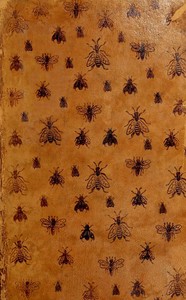
La vie des abeilles by Maurice Maeterlinck
Forget everything you think you know about beekeeping manuals. Maurice Maeterlinck's La vie des abeilles (The Life of the Bee) is something else entirely. Published in 1901, it's the work of a poet and playwright who became obsessed with the glass-walled hive in his garden. He didn't just study bees; he lived with them, watching their daily routines with the attention of a novelist observing a fascinating new society.
The Story
There isn't a plot in the traditional sense. Instead, Maeterlinck takes us through a year in the life of a hive. We see the frenzy of spring swarming, where the colony splits and a new queen must be born. We witness the precise, almost magical construction of the honeycomb. We follow the dangerous mating flight of the queen and the tragic, short lives of the male drones. The central question Maeterlinck circles is the mystery of the hive's collective mind. The queen isn't a ruler giving orders; she's more like a beating heart. The real genius, he argues, is in the group itself—an intelligence that belongs to no single bee but to all of them together.
Why You Should Read It
You should read this because it turns observation into wonder. Maeterlinck writes about bee behavior with such vivid detail and respect that you feel you're peeking into a secret kingdom. He isn't afraid to admit what he doesn't know, which makes his discoveries feel even more exciting. When he describes the worker bees killing the drones after their purpose is served, it's not just biology; it's a stark, dramatic scene. He connects the hive's life to big human ideas about duty, sacrifice, and the greater good, but he never forces the comparison. The bees are fascinating enough on their own.
Final Verdict
This book is perfect for anyone who feels a sense of wonder about the natural world. It's for the curious person who stops to watch ants on a sidewalk or wonders how a flock of birds moves as one. You don't need to be a scientist. In fact, Maeterlinck's poetic eye is what makes it special. If you enjoy authors like Annie Dillard or Robert Macfarlane, who blend deep observation with beautiful prose, you'll find a kindred spirit in Maeterlinck. Just be warned: you might find yourself staring at the next bee you see, wondering what epic drama it's living through.
This digital edition is based on a public domain text. It is now common property for all to enjoy.
Nancy Perez
7 months agoHaving read the author's previous works, the quality of the diagrams and illustrations (if applicable) is top-notch. A mandatory read for anyone in this industry.
Christopher Wilson
9 months agoIf you're tired of surface-level information, the emphasis on ethics and sustainability within the topic is commendable. I'm glad I chose this over the other alternatives.
Nancy Williams
1 year agoRight from the opening paragraph, the footnotes provide extra depth for those who want to dig deeper. If you want to master this topic, start right here.
Barbara Jackson
6 months agoFinally found a version that is easy on the eyes.







Patricia Lopez
6 months agoI was skeptical about the depth of this book at first, but the way the author breaks down the core concepts is remarkably clear. I'm glad I chose this over the other alternatives.