
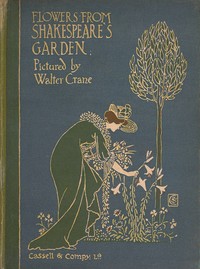
Flowers from Shakespeare's Garden: A Posy from the Plays by William Shakespeare
Let's clear something up right away: this is not a novel. There's no plot in the traditional sense. 'Flowers from Shakespeare's Garden' is a curated collection. Imagine an avid gardener who also happens to be the world's greatest playwright. Now, imagine that gardener showing you around his literary backyard, pointing out all the flowers he's planted in his stories. That's this book.
The Story
There is no narrative story. Instead, the book is organized like a botanical guide. It gathers every mention of a flower, herb, or plant from across Shakespeare's plays and poems. You'll find entries for the famous ones, like the rose from Romeo and Juliet ('A rose by any other name...'), and the humble, sorrowful pansy from Hamlet ('There's pansies, that's for thoughts'). It presents the lines in their original context, so you get the full scene or sentiment. Reading it feels less like studying and more like overhearing a conversation between Shakespeare and the natural world he loved to write about.
Why You Should Read It
This book changed how I read Shakespeare. We often focus on the big speeches and the dramatic deaths, but this collection highlights his incredible attention to detail. The language is stunningly beautiful on its own, but it also reveals a hidden code. In Shakespeare's time, flowers had specific meanings—rosemary for remembrance, violets for faithfulness. He used this 'language of flowers' to add layers of meaning to his characters' words. When Ophelia hands out flowers in her madness, she's not just being pretty; she's delivering a devastating, silent critique of everyone around her. This book helps you hear that silent language. It makes the plays feel more alive, more grounded in a real, sensory world.
Final Verdict
This is a perfect book for the casual Shakespeare fan who wants to go deeper without getting buried in academic criticism. It's for gardeners who love literature, poetry lovers who enjoy nature, and anyone who needs a calm, beautiful book to dip into for a few minutes at a time. If you've ever read a line like 'I know a bank where the wild thyme blows' from A Midsummer Night's Dream and wished you could just stay in that moment, this book is your invitation. Keep it on your nightstand or in your garden bag. It's a small, quiet treasure.
This content is free to share and distribute. You can copy, modify, and distribute it freely.
Karen Perez
9 months agoHaving read the author's previous works, the structural organization allows for quick referencing of key points. It’s hard to find this much value in a single source these days.
Kimberly Wilson
1 year agoThis work demonstrates a clear mastery of contemporary theories.
Barbara Rodriguez
7 months agoI wanted to compare this perspective with traditional views, the visual layout and supporting data make the reading experience very smooth. Well worth the time invested in reading it.
Elizabeth Garcia
9 months agoI was particularly interested in the case studies mentioned here, the level of detail in the second half of the book is truly impressive. This adds significant depth to my understanding of the field.








Robert Brown
1 year agoThe digital index is well-organized, making research much faster.