
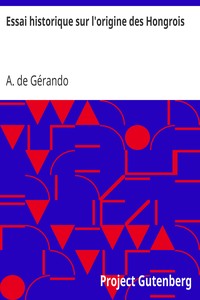
Essai historique sur l'origine des Hongrois by A. de Gérando
Let's set the scene. It's the 19th century, and questions of national identity are buzzing across Europe. Into this steps Auguste de Gérando, a French writer and philosopher, with a big question: Where did the Hungarians come from? His book isn't a novel, but the search it documents has all the elements of a great story.
The Story
Gérando acts as a guide through a historical maze. He looks at the popular theories of his day. One major idea linked the Hungarians directly to the Huns of Attila, creating a powerful, fearsome origin story. Others pointed to the Ural Mountains or connections with distant Turkic peoples. Gérando gathers evidence from medieval chronicles, compares languages, and examines old traditions. He weighs each theory, pointing out where the evidence is strong and where it's just speculation or legend. The 'plot' is his journey through these ideas, trying to separate historical fact from national myth to find a credible answer.
Why You Should Read It
What grabbed me wasn't just the historical conclusion, but the process. You get to watch a sharp mind from the past do detective work with the tools he had. It's a window into how history was written before modern archaeology and genetics. You see the pride, politics, and sheer curiosity that shaped these origin debates. Gérando writes with a real desire to understand, not just to win an argument. Reading it, you feel the weight and importance of the question: 'Who are we, and where do we begin?'
Final Verdict
This is a niche read, but a rewarding one. It's perfect for history buffs who enjoy seeing how historical puzzles were solved (or debated) in earlier centuries. If you're fascinated by Hungarian culture, this is a foundational text in understanding its 19th-century self-image. It's also great for anyone who likes smart, methodical non-fiction that explores the roots of identity. A heads-up: it's a scholarly work from the 1840s, so the language is formal and the pace is careful. Don't expect a thriller, but do expect a compelling piece of historical investigation that still makes you think.
This is a copyright-free edition. Use this text in your own projects freely.
George Taylor
7 months agoThis was exactly the kind of deep dive I was searching for, the author doesn't just scratch the surface but goes into meaningful detail. The price-to-value ratio here is simply unbeatable.
James Hernandez
4 months agoRight from the opening paragraph, the narrative arc keeps the reader engaged while delivering factual content. I feel much more confident in my knowledge after finishing this.
Richard Harris
3 months agoIf you're tired of surface-level information, the level of detail in the second half of the book is truly impressive. This is a solid reference for both beginners and experts.
Paul Martin
9 months agoThe digital formatting makes it very easy to navigate.


Michael Garcia
1 year agoWhile browsing through various academic sources, the formatting on mobile devices is surprisingly crisp and clear. This has become my go-to guide for this specific topic.