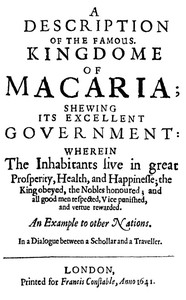
A Description of the Famous Kingdome of Macaria by Gabriel Plattes
Published in the middle of the 17th century, a time of huge political and social upheaval in England, Gabriel Plattes's A Description of the Famous Kingdome of Macaria is a fascinating piece of speculative fiction disguised as a travelogue. It’s not a novel with characters in the traditional sense. Instead, Plattes creates a fictional narrator who has discovered a near-perfect society across the sea.
The Story
The book is presented as a simple report. A traveler stumbles upon the island kingdom of Macaria and lays out its rules and systems for the reader. There's no plot twist or villain. The 'story' is in the revelation of how this society works. Macaria has abolished poverty through smart land use and public welfare. It has no lawyers because its laws are clear and fair. It focuses intensely on scientific research and education to solve public problems, from health to agriculture. The government is a council of experts, and the whole system is designed to create peace, plenty, and happiness for all its citizens. It’s a straightforward, point-by-point blueprint for a better world.
Why You Should Read It
What makes this old book so compelling is its directness and its quiet anger. Plattes wasn't just dreaming for fun. He was looking at the hunger, disease, and political strife of his own time and saying, "It doesn't have to be this way. Here’s how." Reading it, you feel his urgency. The solutions he proposes—state-funded science, universal education, preventive healthcare—sound remarkably modern. It’s a hopeful book, but also a challenging one. It holds up a mirror and asks why simple, good ideas are so hard to implement. It’s less about the fictional kingdom and more about the gap between that ideal and our reality.
Final Verdict
This is a perfect bite-sized read for anyone interested in the history of ideas, politics, or science fiction. It’s a foundational text for the utopian genre, so if you love books like Utopia or Looking Backward, this is essential ancestor reading. It’s also great for people who enjoy ‘what if’ social speculation. The language is old-fashioned but clear, and it’s short enough to digest in one sitting. Don’t go in expecting a sweeping narrative. Go in expecting a passionate, centuries-old policy proposal from a man who wanted to fix everything, and be prepared to be surprised by how familiar his dreams still feel.
No rights are reserved for this publication. Distribute this work to help spread literacy.